Showing posts with label 2011 - 30. Show all posts

Sunday, December 3, 2017

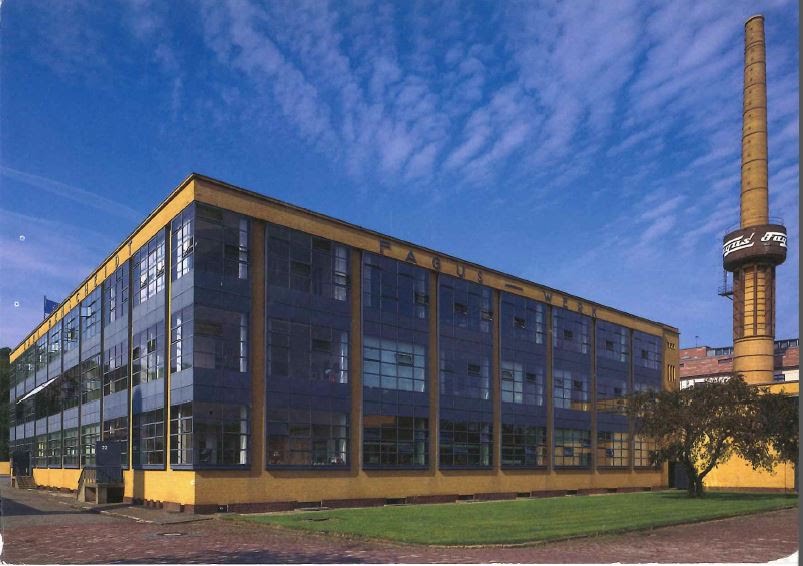
Fagus Factory in Alfeld


Fagus Factory in Alfeld is a 10-building complex - began around 1910 to the design of Walter Gropius, which is a landmark in the development of modern architecture and industrial design. Serving all stages of manufacture, storage and dispatch of lasts used by the shoe industry, the complex, which is still operational today, is situated in Alfeld an der Leine in Lower Saxony. With its groundbreaking vast expanses of glass panels and functionalist aesthetics, the complex foreshadowed the work of the Bauhaus school and is a landmark in the development of architecture in Europe and North America.

N51 59 1 E9 48 40
Date of Inscription: 2011
Criteria: (ii)(iv)
Property : 1.88 ha
Buffer zone: 18.89 ha
Ref: 1368

Tuesday, November 4, 2014

West Lake Cultural Landscape of Hangzhou

 
West Lake Cultural Landscape of Hangzhou
The West Lake Cultural Landscape of Hangzhou, comprising the West Lake and the hills surrounding its three sides, has inspired famous poets, scholars and artists since the 9th century. It comprises numerous temples, pagodas, pavilions, gardens and ornamental trees, as well as causeways and artificial islands.
These additions have been made to improve the landscape west of the city of Hangzhou to the south of the Yangtze river.
The West Lake has influenced garden design in the rest of China as well as Japan and Korea over the centuries and bears an exceptional testimony to the cultural tradition of improving landscapes to create a series of vistas reflecting an idealised fusion between humans and nature.

N30 14 15 E120 8 27
Date of Inscription: 2011
Criteria: (ii)(iii)(vi)
Property : 3,323 ha
Buffer zone: 7,270 ha
Ref: 1334

Source: http://whc.unesco.org

Thursday, July 17, 2014

Ogasawara Islands

 
The property numbers more than 30 islands clustered in three groups and covers surface area of 7,939 hectares. The islands offer a variety of landscapes and are home to a wealth of fauna, including the Bonin Flying Fox, a critically endangered bat, and 195 endangered bird species. Four-hundred and forty-one native plant taxa have been documented on the islands whose waters support numerous species of fish, cetaceans and corals. Ogasawara Islands' ecosystems reflect a range of evolutionary processes illustrated through its assemblage of plant species from both southeast and northwest Asia, alongside many endemic species.

N27 43 6 E142 5 59
Date of Inscription: 2011
Criteria: (ix)
Property : 7,939 ha
Ref: 1362

Monday, May 12, 2014

Historic Centre of Naples


Historic Centre of Naples
From the Neapolis founded by Greek settlers in 470 B.C. to the city of today, Naples has retained the imprint of the successive cultures that emerged in Europe and the Mediterranean basin. This makes it a unique site, with a wealth of outstanding monuments such as the Church of Santa Chiara and the Castel Nuovo.
City and Province of Naples, Campania
N40 51 5 E14 15 46
Date of Inscription: 1995
Minor modification inscribed year: 2011
Criteria: (ii)(iv)
Property : 1,021 ha
Buffer zone: 1,350 ha
Ref: 726bis

Tuesday, February 11, 2014

Selimiye Mosque and its Social Complex


Brief Description

The square Mosque with its single great dome and four slender minarets, dominates the skyline of the former Ottoman capital of Edirne. Sinan, the most famous of Ottoman architects in the 16th century, considered the complex, which includes madrasas (Islamic schools), a covered market, clock house, outer courtyard and library, to be his best work. The interior decoration using Iznik tiles from the peak period of their production testifies to an art form that remains unsurpassed in this material. The complex is considered to be the most harmonious expression ever achieved of the Ottoman külliye, a group of buildings constructed around a mosque and managed as a single institution.

N41 40 40 E26 33 34
Date of Inscription: 2011
Criteria: (i)(iv)
Property : 2.50 ha
Buffer zone: 38 ha
Ref: 1366

Friday, November 8, 2013

Residence of Bukovinian and Dalmatian Metropolitans


Brief Description

The Residence of Bukovinian and Dalmatian Metropolitans represents a masterful synergy of architectural styles built by Czech architect Josef Hlavka from 1864 to 1882. The property, an outstanding example of 19th-century historicist architecture, also includes a seminary and monastery and is dominated by the domed, cruciform Seminary Church with a garden and park. The complex expresses architectural and cultural influences from the Byzantine period onward and embodies the powerful presence of the Orthodox Church during Habsburg rule, reflecting the Austro-Hungarian Empire policy of religious tolerance.

N48 17 48 E25 55 29
Date of Inscription: 2011
Criteria: (ii)(iii)(iv)
Property : 8.00 ha
Buffer zone: 245 ha
Ref: 1330
 

Friday, September 20, 2013

Prehistoric Pile dwellings around the Alps

AUSTRIA


GERMANY

Brief Description

This serial property of 111 small individual sites encompasses the remains of prehistoric pile-dwelling (or stilt house) settlements in and around the Alps built from around 5000 to 500 B.C. on the edges of lakes, rivers or wetlands. Excavations, only conducted in some of the sites, have yielded evidence that provides insight into life in prehistoric times during the Neolithic and Bronze Age in Alpine Europe and the way communities interacted with their environment. Fifty-six of the sites are located in Switzerland. The settlements are a unique group of exceptionally well-preserved and culturally rich archaeological sites, which constitute one of the most important sources for the study of early agrarian societies in the region.

N47 16 42 E8 12 27
Date of Inscription: 2011
Criteria: (iv)(v)
Property : 274 ha
Buffer zone: 3,961 ha
Ref: 1363

Tuesday, May 7, 2013

Cultural Landscape of the Serra de Tramuntana

Thank you Fabienne for the Postcards that you sent :

Brief Description

The Cultural Landscape of the Serra de Tramuntana located on a sheer-sided mountain range parallel to the north-western coast of the island of Mallorca. Millennia of agriculture in an environment with scarce resources has transformed the terrain and displays an articulated network of devices for the management of water revolving around farming units of feudal origins. The landscape is marked by agricultural terraces and inter-connected water works - including water mills - as well as dry stone constructions and farms.
N39 43 51 E2 41 41
Date of Inscription: 2011
Criteria: (ii)(iv)(v)
Property : 30,745 ha
Buffer zone: 78,617 ha
Ref: 1371


XXII CUMBRE IBEROAMERICANA. CADIZ 2012
Fecha de Emisión 16/11/2012
Estampación Offset
Papel Estucado, engomado, fosforescente
Dentado 13 3/4
Tamaño del sello 40,9 x 28,8 mm. (horizontal)
Valor facial de los sellos 0,36 €
Efectos en pliego 50
Tirada 300.000 sellos

Correos issues a stamp with the logo of the XXII Ibero-American Summit to commemorate this event which took place in Cádiz (Spain) on 16 and 17 November 2012.

Ibero-American Summits are meetings held annually by the Heads of State and Governments of the member countries of the Organization of Ibero-American States (OEI).
These meetings are held on a regular basis since 1991 resulting from the idea of institutionalizing an annual meeting of all the Ibero-American countries aiming at strengthening their links.
The first summit was held in Guadalajara (Mexico) in 1991, with a foundational character. Since then it has been held every year in the different member countries. In Spain it has taken place in 1992 and 2005. In 1992, coinciding with the V Centenary of the first voyage of Christopher Columbus to America, it addressed issues such as political coordination, economy, integration and cooperation, education and modernization, cooperation programs, social and human development and sustainable development . In 2005, two issues were addressed: migration and relationships between Ibero-America and the European Union.
Each Summit evolves around a central theme which in the Summit XXII of Cadiz of 2012 verses on "a renewed relationship in the Bicentennial of the Constitution of Cadiz."
This Cádiz Summit aims to strengthen the structures of dialogue and agreement, cooperation and integration of the Ibero-American community in order to boost its presence in world economy and relevant international affairs. To seize opportunities offered by its privileged links with other areas of the world and participate in the whole growth process that responds to the everyday problems of society in welfare, employment and social cohesion issues.Each Summit evolves around a central theme which in the Summit XXII of Cadiz of 2012 verses on "a renewed relationship in the Bicentennial of the Constitution of Cadiz."


FAROS. 2011
Fecha de Emisión 11/04/2011
Estampación Huecograbado
Papel Estucado engomado fosforescente
Dentado 13 ¼ (horizontal) y 13 ¾ (vertical)
Tamaño del sello 28,8 x 40,9 mm. (verticales)
Tamaño de la hoja bloque 115,2 x 105,8 mm. (horizontal)
Valor facial de los sellos 0,65 €
Tirada 280.000 hojas

This Lighthouses issue is devoted to the following six Lighthouses: Calella (Barcelona), Chipiona (Cádiz), La Entallada (Fuerteventura); Cap de Sant Sebastiá (Girona), Castell de Ferro (Granada) and Faro Valencia .

The lighthouse of Calella is located on a hill 50 m above sea level. It was inaugurated in December 1859. It first worked with oil and later with petroleum. It was electrified in 1927. It is currently in service and has a light range covering 35 nautical miles.
The lighthouse of Chipiona became operational in 1867. It has a height of 62 m above the basement and consists of a conical tower. It initially worked with oil and then with petroleum. It was electrified in 1942. Its has a light range of about 80 miles.
The lighthouse of Punta La Entallada in Fuerteventura is a square tower 12 m high, on a one storey stone building. It came into service in December 1954. Its light is white and its range is of 21 miles.
The lighthouse of Cap Sant Sebastià is located on the mountain of San Sebastià de la Guardia 167 m above sea level. It was built in 1875 and is one of the main lighthouses of the Gulf of León. Its tower is 12 m from the base, the light is white and the range is of 32 miles.
The Castell de Ferro lighthouse is built on a promontory 225 m. above sea level. It has a tapered shape and stands 9.40 m over the basement. It receives electricity through photovoltaic panels and has a light range of 14 miles. It was built from an old XI Arab watchtower.
The lighthouse of Valencia dates from 1930 and King Alfonso XIII laid its foundation stone. Its tower is octagonal and masonry. It has a focal plane height of 30 m. The light is white and the range is of 25 miles.
The six stamps depict the buildings of each of the lighthouses.