Showing posts with label UNESCO: Italy. Show all posts

Tuesday, December 19, 2017

The Trulli of Alberobello


The trulli , limestone dwellings found in the southern region of Puglia, are remarkable examples of drywall (mortarless) construction, a prehistoric building technique still in use in this region. The trulli are made of roughly worked limestone boulders collected from neighbouring fields. Characteristically, they feature pyramidal, domed or conical roofs built up of corbelled limestone slabs.

Province of Bari, Puglia Region
N40 46 57 E17 14 12.984
Date of Inscription: 1996
Criteria: (iii)(iv)(v)
Property : 10.52 ha
Ref: 787

The Sassi and the Park of the Rupestrian Churches of Matera


This is the most outstanding, intact example of a troglodyte settlement in the Mediterranean region, perfectly adapted to its terrain and ecosystem. The first inhabited zone dates from the Palaeolithic, while later settlements illustrate a number of significant stages in human history. Matera is in the southern region of Basilicata.

City and Province of Matera, Region of Basilicata
N40 39 59 E16 36 37
Date of Inscription: 1993
Criteria: (iii)(iv)(v)
Property : 1,016 ha
Buffer zone: 4,365 ha
Ref: 670

Late Baroque Towns of the Val di Noto (South-Eastern Sicily)


The eight towns in south-eastern Sicily: Caltagirone, Militello Val di Catania, Catania, Modica, Noto, Palazzolo, Ragusa and Scicli, were all rebuilt after 1693 on or beside towns existing at the time of the earthquake which took place in that year. They represent a considerable collective undertaking, successfully carried out at a high level of architectural and artistic achievement. Keeping within the late Baroque style of the day, they also depict distinctive innovations in town planning and urban building.

Provinces of Catania, Ragusa, and Syracuse, Sicily
N36 53 35.5 E15 4 8.1
Date of Inscription: 2002
Criteria: (i)(ii)(iv)(v)
Property : 112.79 ha
Buffer zone: 305.8 ha
Ref: 1024rev

Sunday, December 3, 2017

Historic Centre of San Gimignano


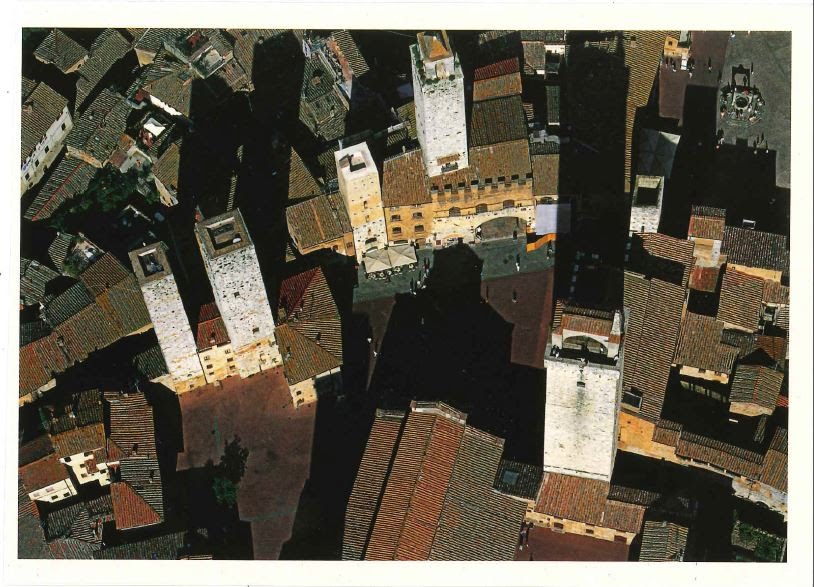
'San Gimignano delle belle Torri' is in Tuscany, 56 km south of Florence. It served as an important relay point for pilgrims travelling to or from Rome on the Via Francigena. The patrician families who controlled the town built around 72 tower-houses (some as high as 50 m) as symbols of their wealth and power. Although only 14 have survived, San Gimignano has retained its feudal atmosphere and appearance. The town also has several masterpieces of 14th- and 15th-century Italian art.

Province of Siena, Tuscany
N43 28 5.016 E11 2 30.012
Date of Inscription: 1990
Criteria: (i)(iii)(iv)
Property : 13.88 ha
Ref: 550

Historic Centre of Siena


Siena is the embodiment of a medieval city. Its inhabitants pursued their rivalry with Florence right into the area of urban planning. Throughout the centuries, they preserved their city's Gothic appearance, acquired between the 12th and 15th centuries. During this period the work of Duccio, the Lorenzetti brothers and Simone Martini was to influence the course of Italian and, more broadly, European art. The whole city of Siena, built around the Piazza del Campo, was devised as a work of art that blends into the surrounding landscape.

City and Province of Siena, Tuscany
N43 19 7 E11 19 54
Date of Inscription: 1995
Criteria: (i)(ii)(iv)
Property : 170 ha
Buffer zone: 9,907 ha
Ref: 717

Sacri Monti of Piedmont and Lombardy

Lago D'Orta

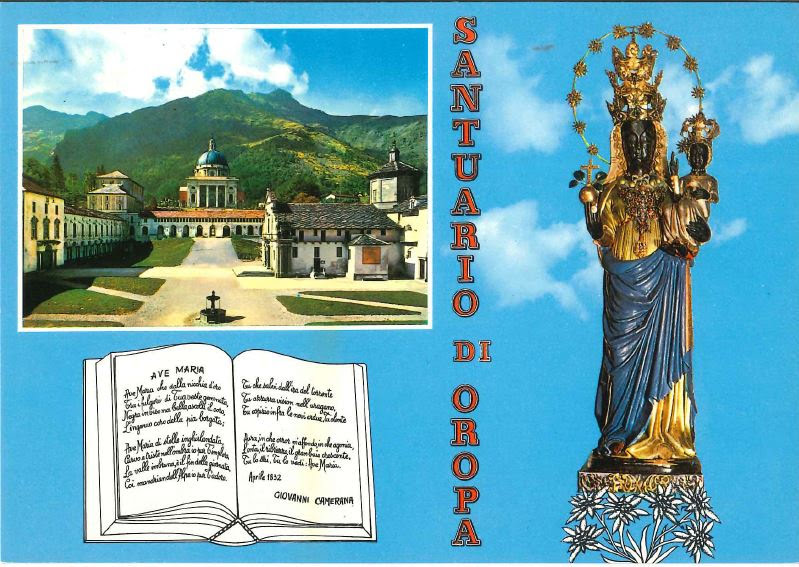
The nine Sacri Monti (Sacred Mountains) of northern Italy are groups of chapels and other architectural features created in the late 16th and 17th centuries and dedicated to different aspects of the Christian faith. In addition to their symbolic spiritual meaning, they are of great beauty by virtue of the skill with which they have been integrated into the surrounding natural landscape of hills, forests and lakes. They also house much important artistic material in the form of wall paintings and statuary.


  • The Sacro Monte of Nuova Gerusalemme (New Jerusalem) of Varallo Sesia (1486), Varallo Sesia, province of Vercelli
  • The Sacro Monte of Santa Maria Assunta, Serralunga di Crea (1589), province of Alessandria
  • The Sacro Monte of San Francesco, Orta San Giulio (1590), province of Novara
  • The Sacro Monte of the Rosary, Varese (1598)
  • The Sacro Monte of the Blessed Virgin, Oropa (1617), province of Biella
  • The Sacro Monte of the Blessed Virgin of Succour, Ossuccio (1635), province of Como
  • The Sacro Monte of the Holy Trinity, Ghiffa (1591), province of Verbano-Cusio-Ossola
  • The Sacro Monte and Calvary, Domodossola (1657), province of Verbano-Cusio-Ossola
  • The Sacro Monte of Belmonte, Valperga (1712), Metropolitan City of Turin


Regions of Lombardy and Piedmont
N45 58 28.4 E9 10 10.4
Date of Inscription: 2003
Criteria: (ii)(iv)
Property : 90.5 ha
Buffer zone: 721.9 ha
Ref: 1068rev

Portovenere, Cinque Terre, and the Islands (Palmaria, Tino and Tinetto)


The Ligurian coast between Cinque Terre and Portovenere is a cultural landscape of great scenic and cultural value. The layout and disposition of the small towns and the shaping of the surrounding landscape, overcoming the disadvantages of a steep, uneven terrain, encapsulate the continuous history of human settlement in this region over the past millennium.

Province of La Spezia, Liguria Region
N44 6 24.984 E9 43 45.012
Date of Inscription: 1997
Criteria: (ii)(iv)(v)
Property : 4,689.25 ha
Ref: 826

Wednesday, October 18, 2017

City of Vicenza and the Palladian Villas of the Veneto


Founded in the 2nd century B.C. in northern Italy, Vicenza prospered under Venetian rule from the early 15th to the end of the 18th century. The work of Andrea Palladio (1508–80), based on a detailed study of classical Roman architecture, gives the city its unique appearance. Palladio's urban buildings, as well as his villas, scattered throughout the Veneto region, had a decisive influence on the development of architecture. His work inspired a distinct architectural style known as Palladian, which spread to England and other European countries, and also to North America.


  • City of Vicenza including 23 buildings by Palladio
  • Villa Trissino
  • Villa Gazzotti Grimani
  • Villa Almerico Capra, «La Rotonda»
  • Villa Angarano
  • Villa Caldogno
  • Villa Chiericati
  • Villa Forni Cerato
  • Villa Godi
  • Villa Pisani
  • Villa Poiana
  • Villa Saraceno
  • Villa Thiene
  • Villa Trissino
  • Villa Valmarana - Bolzano Vicentino
  • Villa Valmarana - Monticello Conte Otto
  • Villa Badoer
  • Villa Barbaro
  • Villa Emo
  • Villa Zeno
  • Villa Foscari,
  • Villa Pisani
  • Villa Cornaro
  • Villa Piovene

Provinces of Padua, Rovigo, Treviso, Venice, Verona and Vicenza, Veneto Region
N45 32 57 E11 32 58
Date of Inscription: 1994
Extension: 1996
Criteria: (i)(ii)
Property : 333.87 ha
Ref: 712bis

Thursday, October 22, 2015

Costiera Amalfitana


The Amalfi coast is an area of great physical beauty and natural diversity. It has been intensively settled by human communities since the early Middle Ages. There are a number of towns such as Amalfi and Ravello with architectural and artistic works of great significance. The rural areas show the versatility of the inhabitants in adapting their use of the land to the diverse nature of the terrain, which ranges from terraced vineyards and orchards on the lower slopes to wide upland pastures.

Province of Salerno, Campania
N40 38 60 E14 35 60
Date of Inscription: 1997
Criteria: (ii)(iv)(v)
Property : 11,231 ha 
Ref: 830

Monday, October 12, 2015

Genoa: Le Strade Nuove and the system of the Palazzi dei Rolli

Palazzo Reale (Genoa) Stefano Balbi
The Strade Nuove and the system of the Palazzi dei Rolli in Genoa’s historic centre date from the late 16th and early 17th centuries when the Republic of Genoa was at the height of its financial and seafaring power. The site represents the first example in Europe of an urban development project parcelled out by a public authority within a unitary framework and associated to a particular system of ‘public lodging’ in private residences, as decreed by the Senate in 1576. The site includes an ensemble of Renaissance and Baroque palaces along the so-called ‘new streets’ (Strade Nuove). The Palazzi dei Rolli offer an extraordinary variety of different solutions, achieving universal value in adapting to the particular characteristics of the site and to the requirements of a specific social and economic organization. They also offer an original example of a public network of private residences designated to host state visits.

The 44 Palaces

  1. Antonio Doria
  2. Clement Della Rovere
  3. Giorgio Spinola
  4. Tomaso Spinola
  5. Giacomo Spinola
  6. Augustine Ayrolo
  7. Paolo e Nicolò Interiano
  8. Agostino Pallavicini
  9. Pantaleo Spinola
  10. Franco Lercari
  11. Tobia Pallavicini
  12. Angelo Giovanni Spinola
  13. Gio Battista Spinola
  14. Nicolosio Lomellino
  15. Lazzaro and Giacomo Spinola
  16. Nicolò Grimaldi
  17. Baldassarre Lomellini
  18. Luca Grimaldi
  19. Rodolfo and Francesco Brignole Sale
  20. Gerolamo Grimaldi
  21. Gio Carlo Brignole
  22. Bartholomew Lomellini
  23. Stefano Lomellini
  24. Giacomo Lomellini and Cattaneo De Marini
  25. Antoniotto Cattaneo
  26. G. Agostino Balbi
  27. Gio Francesco Balbi
  28. Giocomo and Pantaleo Balbi
  29. Francesco Balbi Piovera
  30. Stefano Balbi
  31. Cosma Centurione
  32. Giorgio Centurione
  33. Gio Battista Centurione
  34. Cipriano Pallavicini
  35. Nicolò Spinola
  36. Francesco Grimaldi
  37. Gio Battista Grimaldi
  38. Stefano De Mari
  39. Ambrose De Nigro
  40. Emanuele Filiberto Di Negro
  41. Croce De Marini

Liguria Region, Genoa Province
N44 24 44 E8 55 52
Date of Inscription: 2006
Criteria: (ii)(iv)
Property : 16 ha 
Buffer zone: 113 ha
Ref: 1211

Thursday, October 1, 2015

Longobards in Italy. Places of the Power (568-774 A.D.)

The Tempietto Longobardo. of  Cividale del Friuli (Province of Udine)
The Longobards in Italy, Places of Power, 568 - 774 A.D. comprises seven groups of important buildings (including fortresses, churches, and monasteries) throughout the Italian Peninsula. They testify to the high achievement of the Lombards, who migrated from northern Europe and developed their own specific culture in Italy where they ruled over vast territories in the 6th to 8th centuries. The Lombards synthesis of architectural styles marked the transition from Antiquity to the European Middle Ages, drawing on the heritage of Ancient Rome, Christian spirituality, Byzantine influence and Germanic northern Europe. The serial property testifies to the Lombards' major role in the spiritual and cultural development of Medieval European Christianity, notably by bolstering the monastic movement.

  • Cividale del Friuli (Province of Udine)
  • Brescia
  • Castelseprio (Province of Varese)
  • Spoleto (Province of Perugia)
  • Campello sul Clitunno (Province of Perugia)
  • Benevento
  • Monte Sant'Angelo (Province of Foggia)


N46 5 39 E13 25 59
Date of Inscription: 2011
Criteria: (ii)(iii)(vi)
Property : 14 ha 
Buffer zone: 306 ha
Ref: 1318

Monday, September 28, 2015

Archaeological Area and the Patriarchal Basilica of Aquileia


Aquileia (in Friuli-Venezia Giulia), one of the largest and wealthiest cities of the Early Roman Empire, was destroyed by Attila in the mid-5th century. Most of it still lies unexcavated beneath the fields, and as such it constitutes the greatest archaeological reserve of its kind. The patriarchal basilica, an outstanding building with an exceptional mosaic pavement, played a key role in the evangelization of a large region of central Europe.

Province of Udine, Friuli-Venezia Giulia Region
N45 46 6 E13 22 3
Date of Inscription: 1998
Criteria: (iii)(iv)(vi)
Property : 155 ha 
Ref: 825

Wednesday, March 4, 2015

Isole Eolie (Aeolian Islands)


Isole Eolie (Aeolian Islands)

The Aeolian Islands provide an outstanding record of volcanic island-building and destruction, and ongoing volcanic phenomena. Studied since at least the 18th century, the islands have provided the science of vulcanology with examples of two types of eruption (Vulcanian and Strombolian) and thus have featured prominently in the education of geologists for more than 200 years. The site continues to enrich the field of vulcanology.

Mediterranean Sea - Southern Tyrrhenian Sea
N38 29 16.3 E14 56 44.1
Date of Inscription: 2000
Criteria: (viii)
Property : 1,216 ha 
Ref: 908

Friday, May 23, 2014

Mount Etna


Mount Etna
Mount Etna is an iconic site encompassing 19,237 uninhabited hectares on the highest part of Mount Etna, on the eastern coast of Sicily. Mount Etna is the highest Mediterranean island mountain and the most active stratovolcano in the world. The eruptive history of the volcano can be traced back 500,000 years and at least 2,700 years of this activity has been documented. The almost continuous eruptive activity of Mount Etna continues to influence volcanology, geophysics and other Earth science disciplines. The volcano also supports important terrestrial ecosystems including endemic flora and fauna and its activity makes it a natural laboratory for the study of ecological and biological processes. The diverse and accessible range of volcanic features such as summit craters, cinder cones, lava flows and the Valle de Bove depression have made the site a prime destination for research and education.

N37 45 22 E14 59 48
Date of Inscription: 2013
Criteria: (viii)
Property : 19,237 ha
Buffer zone: 26,220 ha
Ref: 1427

Wednesday, May 14, 2014

Assisi, the Basilica of San Francesco and Other Franciscan Sites


Assisi, the Basilica of San Francesco and Other Franciscan Sites
Assisi, a medieval city built on a hill, is the birthplace of Saint Francis, closely associated with the work of the Franciscan Order. Its medieval art masterpieces, such as the Basilica of San Francesco and paintings by Cimabue, Pietro Lorenzetti, Simone Martini and Giotto, have made Assisi a fundamental reference point for the development of Italian and European art and architecture.
 
N43 3 58.2 E12 37 20.8
Date of Inscription: 2000
Property : 14,563 ha
Buffer zone: 4,087 ha
Ref: 990
 
Source: whc.unesco.org

City of Verona


City of Verona
The historic city of Verona was founded in the 1st century B.C. It particularly flourished under the rule of the Scaliger family in the 13th and 14th centuries and as part of the Republic of Venice from the 15th to 18th centuries. Verona has preserved a remarkable number of monuments from antiquity, the medieval and Renaissance periods, and represents an outstanding example of a military stronghold.
City and Province of Verona, Veneto Region
N45 26 19 E10 59 38
Date of Inscription: 2000
Criteria: (ii)(iv)
Property : 453 ha
Buffer zone: 325 ha
Ref: 797rev

Monday, May 12, 2014

Historic Centre of Naples


Historic Centre of Naples
From the Neapolis founded by Greek settlers in 470 B.C. to the city of today, Naples has retained the imprint of the successive cultures that emerged in Europe and the Mediterranean basin. This makes it a unique site, with a wealth of outstanding monuments such as the Church of Santa Chiara and the Castel Nuovo.
City and Province of Naples, Campania
N40 51 5 E14 15 46
Date of Inscription: 1995
Minor modification inscribed year: 2011
Criteria: (ii)(iv)
Property : 1,021 ha
Buffer zone: 1,350 ha
Ref: 726bis

Wednesday, March 19, 2014

Historic Centre of the City of Pienza


Historic Centre of the City of Pienza
It was in this Tuscan town that Renaissance town-planning concepts were first put into practice after Pope Pius II decided, in 1459, to transform the look of his birthplace. He chose the architect Bernardo Rossellino, who applied the principles of his mentor, Leon Battista Alberti. This new vision of urban space was realized in the superb square known as Piazza Pio II and the buildings around it: the Piccolomini Palace, the Borgia Palace and the cathedral with its pure Renaissance exterior and an interior in the late Gothic style of south German churches.
Province of Siena, Tuscany
N43 4 37 E11 40 43
Date of Inscription: 1996
Criteria: (i)(ii)(iv)
Property : 4.41 ha 
Ref: 789


Tuesday, March 18, 2014

Crespi d'Adda


Crespi d'Adda
Crespi d'Adda in Capriate San Gervasio in Lombardy is an outstanding example of the 19th- and early 20th-century 'company towns' built in Europe and North America by enlightened industrialists to meet the workers' needs. The site is still remarkably intact and is partly used for industrial purposes, although changing economic and social conditions now threaten its survival.
Province of Bergamo, Lombardy
N45 35 35.988 E9 32 17.988
Date of Inscription: 1995
Criteria: (iv)(v)
Ref: 730

Friday, February 14, 2014

Piazza del Duomo, Pisa


 Piazza del Duomo, Pisa
Standing in a large green expanse, Piazza del Duomo houses a group of monuments known the world over. These four masterpieces of medieval architecture – the cathedral, the baptistry, the campanile (the 'Leaning Tower') and the cemetery – had a great influence on monumental art in Italy from the 11th to the 14th century. 
City and Province of Pisa, Tuscany
N43 43 23 E10 23 47
Date of Inscription: 1987
Minor modification inscribed year: 2007
Criteria: (i)(ii)(iv)(vi)
Property : 8.87 ha
Buffer zone: 254 ha
Ref: 395bis